
Knowledge Management Tools: The Ultimate Guide to Best Solutions
In today’s fast-paced business environment, efficient knowledge sharing and management are critical for maintaining a competitive edge. Knowledge management tools have become indispensable in helping organizations capture, organize, and disseminate information effectively. With the growing volume of data and the increasing complexity of workflows, these tools empower teams to work smarter, foster innovation, and improve decision-making.
This ultimate guide dives deep into the world of knowledge management tools, exploring their importance, key features, and some of the best solutions available in the market today. Whether you’re a small startup or a large corporation, understanding these tools can elevate your knowledge management strategy to new heights.
What Are Knowledge Management Tools?
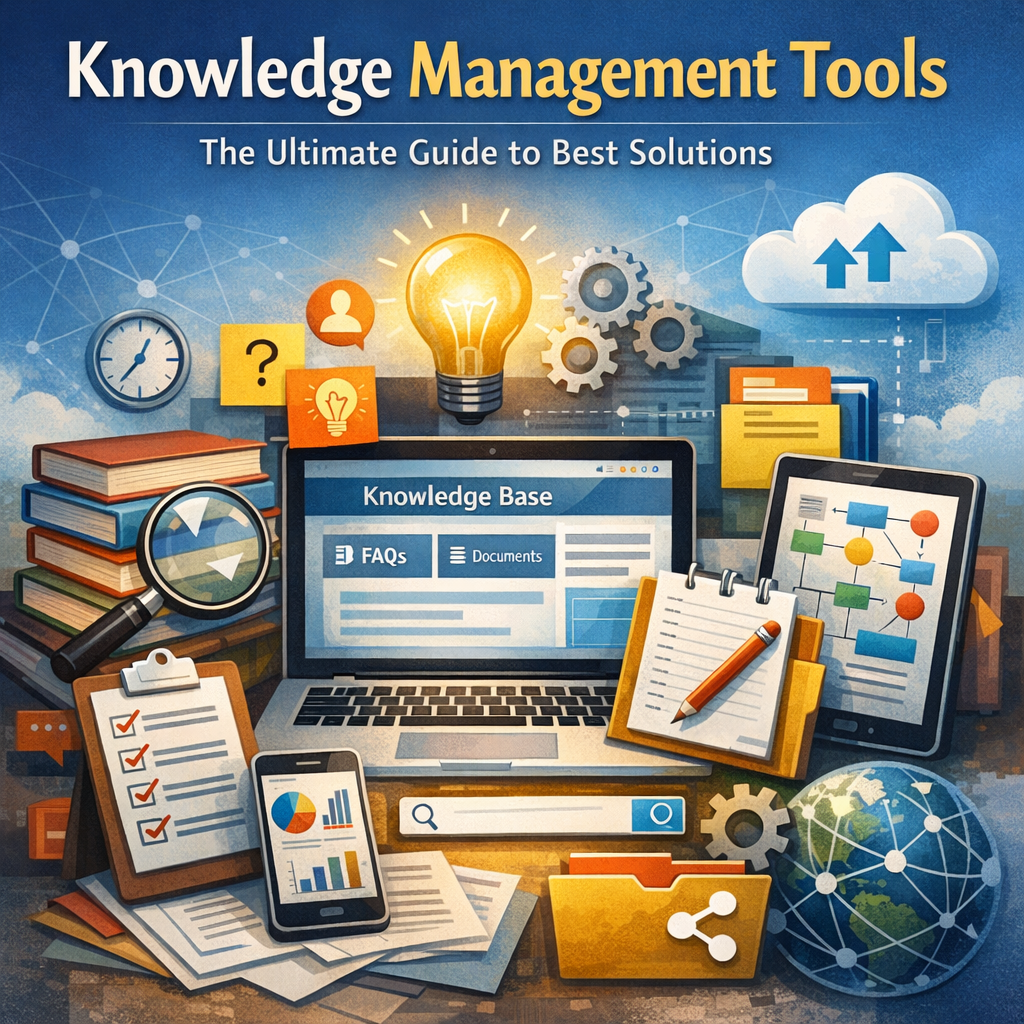
Knowledge management tools are software applications designed to facilitate the creation, storage, retrieval, and sharing of knowledge within an organization. They act as a central hub where information is organized in a way that is easy to access and update. By leveraging these tools, companies can avoid the pitfalls of knowledge silos, reduce duplication of effort, and retain critical intellectual capital even when employees leave.
These tools support a range of knowledge management activities, including document management, collaboration, workflow automation, and data analytics. The goal is to streamline the continuous process of capturing tacit and explicit knowledge to boost productivity and innovation.
Why Companies Need Knowledge Management Tools
As organizations grow, the volume of information they generate increases exponentially, making it hard for employees to find relevant knowledge quickly. This can lead to inefficiencies, mistakes, or missed opportunities. Here are some reasons why knowledge management tools are essential:
– Improve Collaboration: They provide platforms for teams to share insights, brainstorm ideas, and work collectively on projects transparently.
– Save Time: Quick access to accurate information reduces time spent searching for answers and allows employees to focus on value-added tasks.
– Preserve Institutional Knowledge: These tools capture expertise and best practices, ensuring they remain within the organization despite staff turnover.
– Support Decision-Making: By having a centralized knowledge repository, leaders can make informed decisions based on comprehensive, up-to-date data.
– Enhance Customer Service: Customer-facing teams can access past interactions, FAQs, and internal documents to resolve issues more efficiently.
Key Features to Look for in Knowledge Management Tools
Choosing the right knowledge management tools for your organization depends on your specific needs and goals. However, several features are commonly considered indispensable:
1. Easy Content Creation and Editing
A user-friendly interface that allows employees to contribute and update content without needing advanced technical skills ensures ongoing knowledge sharing.
2. Robust Search Capability
An advanced search function supports quick retrieval of documents, conversations, and media across the platform.
3. Collaboration and Communication
Integrated chat, commenting, and real-time editing features foster teamwork and immediate feedback.
4. Access Control and Security
Granular permissions help protect sensitive information and ensure that only authorized users can view or modify certain content.
5. Integration with Existing Tools
Seamless integration with project management software, CRM systems, and other workplace apps avoids workflow disruption.
6. Analytics and Reporting
Insights into usage patterns help management understand how knowledge is being used and identify areas for improvement.
Top Knowledge Management Tools in the Market
Below are some of the best-known knowledge management tools favored by businesses across industries:
Confluence by Atlassian
Confluence is a powerful knowledge management and collaboration platform designed for teams to create, share, and maintain content in one place. It integrates well with Jira, making it ideal for software development teams, but it also suits marketing, HR, and customer support departments.
Notion
Notion offers a flexible workspace combining notes, databases, tasks, and wikis. Its highly customizable nature makes it a favorite among startups and creative teams looking for a versatile all-in-one solution.
SharePoint
Microsoft SharePoint is widely used for enterprise-level document management and intranet solutions. It supports complex workflows, advanced permissions, and deep integration with the Microsoft 365 ecosystem.
Guru
Guru provides a knowledge management system focused on quick access to verified information. It offers browser extensions and integrations to surface knowledge contextually, ensuring employees get answers without breaking their workflow.
Tettra
Tettra is a lightweight knowledge base designed for internal company use. Its simple interface helps teams document policies, procedures, and FAQs, constantly improving with user feedback.
Implementing Knowledge Management Tools Successfully
Choosing the best tools is only half the battle. Effective implementation involves clear planning, employee buy-in, and ongoing refinement.
– Assess Needs: Identify knowledge gaps, who the users are, and what content is most valuable.
– Set Clear Goals: Define what you want the knowledge management system to achieve, such as reducing onboarding time or improving customer satisfaction.
– Train Employees: Offer training sessions and resources to encourage adoption and show the benefits.
– Govern Content Quality: Establish guidelines for content creation, review, and updates to maintain accuracy.
– Encourage a Knowledge Sharing Culture: Recognition programs and leadership support can motivate employees to contribute regularly.
– Monitor and Iterate: Use analytics to measure success and make incremental improvements.
The Future of Knowledge Management Tools
Emerging technologies like artificial intelligence (AI) and machine learning (ML) are shaping the next generation of knowledge management tools. These advancements enable smarter search, automated content tagging, and predictive analytics that personalize knowledge delivery based on user behavior.
Moreover, as remote and hybrid work models become standard, cloud-based knowledge solutions that facilitate seamless access from anywhere will continue to gain prominence.
—
In conclusion, knowledge management tools are vital for modern organizations aiming to harness collective intelligence, improve operational efficiency, and foster innovation. By understanding their benefits, evaluating essential features, and selecting the right tools, businesses can create a dynamic environment where knowledge is a true strategic asset. Investing time and resources into implementing these tools properly will pay dividends in agility and long-term growth.